
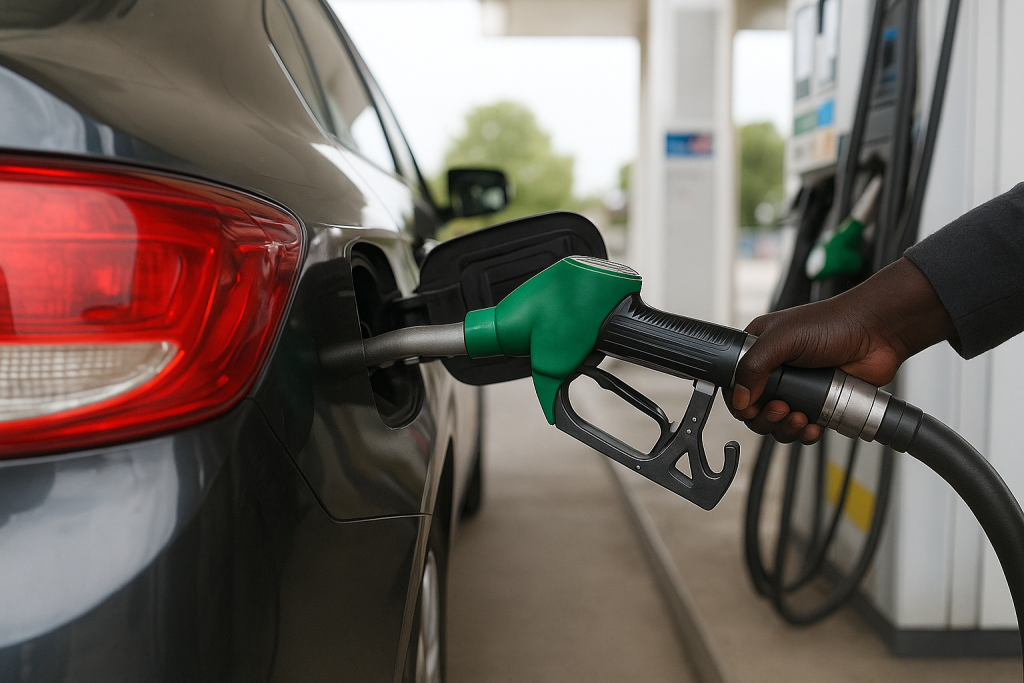
A car being fueled at a petrol station.
Kenya mulls new taxes on fuel and power in 2026
It targets to collect Sh479 billion every year for five years
President William Ruto’s government is planning to introduce new taxes on fuel and electricity in 2026, a move likely to worsen the already high cost of living for Kenyans.
Dubbed Consolidated Energy Fund (CEF), kitty seeks to raise $18.7 billion in five years towards improving energy related infrastructure including dams, geothermal power stations and solar projects even as the country seek to add 5,000 megawatts to its power grid by 2030.
This means that the state will collect at least Sh478 billion from taxpayers every year until 2030, pushing up the cost of power and fuel.
According to Energy Cabinet Secretary Opiyo Wandayi, the fund will draw money from multiple sources, including appropriations from Parliament and contributions from energy sector players, which are likely to include new charges collected from consumers on fuel or electricity.
“The sources of the Fund shall be pursuant to Section 216(2) of the Energy Act and include appropriations from Parliament, contributions from energy sector players,” Wandayi said in the Petroleum Policy for 2025–29.
Kenyan consumers already pay several levies that support energy related projects.
These include the Roads Maintenance Levy, charged at Sh25 per litre of petrol and diesel, and the Petroleum Development Levy (PDL), levied at Sh5.40 per litre of petrol and diesel and Sh0.40 per litre of
kerosene.
In the electricity sector, the Rural Electrification Authority (REA) Levy, charged at five per cent of the cost of electricity units
consumed, helps fund electrification initiatives in rural areas.
Tax experts, economists and energy analysts who talked to the Business Standard have projected an additional Sh3 per litre of fuel and Sh1 for every unit of power if the country hopes to hit an annual target of Sh480 billion.
According to Jacob Luyegu, a tax policy expert based in the UK, an additional tax, however minimum on fuel and electricity, spells doom for any given economy.
“The cost of production is likely to go up by at least Sh5. Producers will not blink passing the cost to consumers, already struggling to put food on the table. This is total madness,’’ he said.
Terry Musau, a retired energy engineer wonders where Kenya is planning to take an additional 5,000 megawatts of power if consumers are already paying for idle power.
“Although Kenya has an ambitious plan to add more power to its grid, the reasoning in the Energy and Petroleum Policy for 2025–29 defies core principles of demand and supply,’’ Musau said.
“The manufacturing sector barely contributes less than 10 per cent to Kenya’s GDP. Why can’t the government push for more industries before advocating for more power? This is insane,’’ he said.
Kenya pays billions to Independent Power Producers (IPPs) for unused power every year, with the data from the energy regulator indicating that Kenya Power paid Sh151.7 billion to Kenya Electricity Generating Company PLC (KenGen) and other Independent Power Producers (IPPs) in the 2023/24 financial year


